Cognitive Overload Is Replacing Burnout
Why Nervous System Capacity Determines Sustainable Performance in 2026
For years, we’ve talked about burnout as emotional exhaustion. But in 2026, what many organizations are calling burnout is increasingly being recognized as cognitive overload — a nervous system capacity issue.
This distinction matters.
Because if we mislabel the problem, we misapply the solution.
Burnout suggests depletion.
Cognitive overload reveals something deeper: the brain and nervous system are being asked to process more information, decisions, digital input, and emotional complexity than they currently have the capacity to handle.
And capacity is trainable.
What Is Cognitive Overload?
Cognitive overload occurs when incoming demands exceed the brain’s processing bandwidth.
When the prefrontal cortex is continuously taxed without adequate recovery, the nervous system shifts toward survival physiology rather than adaptive performance.
The modern professional is navigating:
Continuous notifications
Rapid decision cycles
Fragmented attention
Emotional labor
Performance visibility
Blurred boundaries between work and recovery
The human nervous system was not designed for sustained high-density input without structured recovery.
When demands exceed capacity, the autonomic nervous system shifts toward survival mode.
Focus narrows.
Irritability increases.
Sleep fragments.
Energy drops.
Recovery slows.
Over time, this chronic overload manifests as what we’ve traditionally labeled burnout.
But burnout is the outcome.
Cognitive overload is the mechanism.
Why Traditional Burnout Solutions Fall Short
Most burnout strategies focus on surface-level interventions:
Time management
Work-life balance
Mindfulness programs
Vacation policies
Resilience workshops
These approaches can help temporarily.
But they do not increase nervous system capacity.
They attempt to manage output without upgrading the system responsible for producing that output.
If cognitive demands continue to rise — and they are — coping strategies alone will never be enough.
You cannot out-schedule neurological overload.
You must expand the system itself.
Burnout Is a Capacity Problem
Capacity determines how much complexity, stress, and responsibility a system can hold before destabilizing.
When nervous system capacity expands:
Recovery improves
Focus stabilizes
Emotional reactivity decreases
Cognitive flexibility increases
Energy becomes sustainable
This is not about pushing harder.
It is about strengthening the physiological foundation that supports performance.
For over 25 years, I have worked with the spine and nervous system clinically. When structural resistance decreases and alignment improves, the body regains efficiency and energy.
The same principle applies neurologically.
When internal resistance decreases and autonomic flexibility improves, capacity grows.
And when capacity grows, stress becomes usable energy rather than chronic depletion.
The Future of Leadership Is Energy-First
The next era of leadership will not reward constant output.
It will reward physiological sustainability.
Organizations that thrive will understand:
Energy is a strategic performance asset
Nervous system capacity determines resilience
Recovery is foundational, not optional
Adaptability is trainable
Success that costs health is not scalable.
And it is no longer acceptable.
Cognitive overload makes that clear.
Moving From Burnout Recovery to Capacity Expansion
Burnout recovery asks:
How do we help people recover once they collapse?
Capacity expansion asks:
How do we build systems strong enough to prevent collapse in the first place?
That shift — from reactive recovery to proactive capacity building — defines the next evolution of workplace wellbeing.
Technology will not slow down.
Information density will not decrease.
The only sustainable path forward is expanding the nervous system’s ability to meet modern demands.
A New Solution for a New Era
Cognitive overload is not a trend.
It is a reflection of an accelerating world colliding with human physiology.
The solution is not doing less.
It is increasing internal capacity.
That means strengthening the nervous system, improving flexibility under pressure, and building energy that sustains performance rather than depletes it.
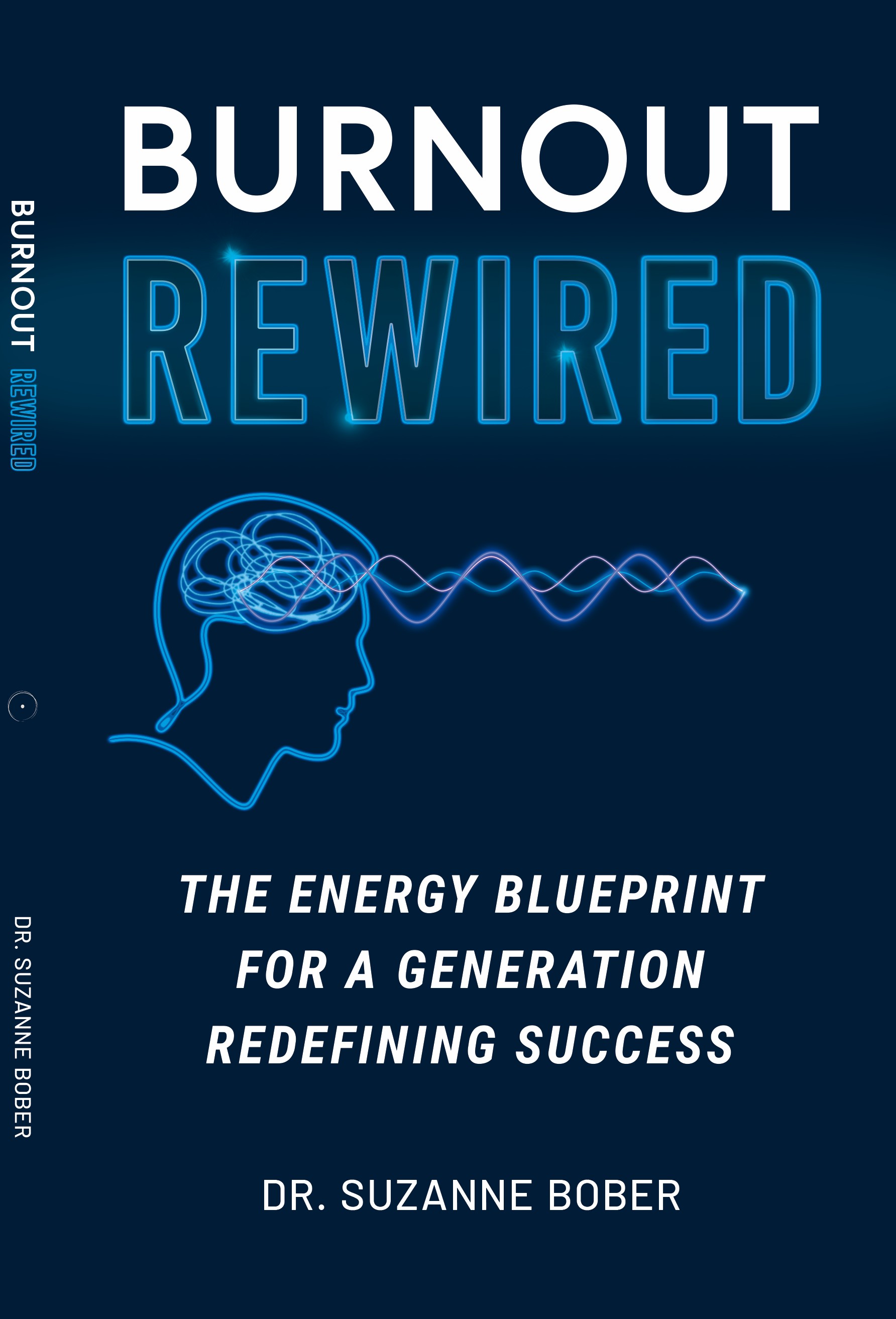
In Burnout Rewired, I explore what it means to move beyond burnout recovery and toward something more powerful — rewiring the nervous system to expand capacity in an age of cognitive overload.
Because burnout is not a motivation problem.
It is a capacity problem.
Capacity can grow.
And in the age of cognitive overload, it must.
If this perspective resonates, I go further into what is happening in the nervous system in my full Medium article: You’re Not Burned Out. You're Running at Full Capacity. Here's Why.
